Release time:Oct 29,2026
Click amount:'0
By:Guangdong Richeng Technology Industry Co., Ltd
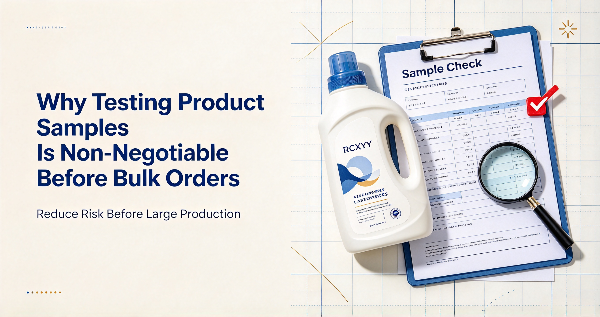
Placing a large production order for laundry detergent or household cleaning products without evaluating samples first can expose buyers to avoidable risks. The product that arrives in a 20-foot container may look similar to the brochure, but differences in fragrance strength, foam behaviour, stain removal, viscosity or skin feel can affect retailer reorders and consumer satisfaction.
This guide explains what buyers should evaluate when requesting a detergent sample order, the key testing dimensions to compare, and how to turn sample feedback into a clear specification that reduces the risk of disappointing bulk shipments. It is written for brand owners, private label operators, importers and first-time buyers who want to approach sampling in a structured way. For manufacturers that support sample development and bulk production, visit https://www.gdricheng.com/.
Why Samples Matter Before Bulk Production
A sample is the closest preview of what bulk production will deliver. Even a well-written specification cannot fully capture how a product smells in a real wash, how it rinses under local water conditions, or how the packaging feels on shelf. A structured detergent sample order allows buyers to:
• Compare formulations side by side: Evaluate two or more suppliers or formulations on the same stains, fabrics and water conditions.
• Test under local conditions: Wash with the water hardness, temperature and machine type common in the target market.
• Confirm fragrance and sensory profile: Fragrance is hard to judge from a description; it needs to be smelled, used and re-evaluated after washing.
• Identify issues before volume commitment: Problems found in a 500 ml sample are far cheaper to fix than problems found in a full container.
• Build an approved reference standard: The agreed sample becomes the benchmark against which bulk production is checked.
Explore our private label laundry and cleaning OEM capabilities to see how sample development fits into a typical program.
What to Evaluate in a Detergent Sample
A useful sample test covers several dimensions, not just "does it clean well". Buyers should prepare a simple scoring sheet and test each candidate product in the same conditions.
Prepare standardised test fabrics with common stains — such as oil, tea, coffee, grass or sebum — and wash them under controlled conditions. Compare stain removal between samples using the same dose, water temperature, water hardness and wash cycle. Take photos before and after for objective comparison. Different samples should be tested under as similar conditions as possible, with the actual dose and test conditions recorded. Note that cleaning performance can vary significantly by water hardness, so testing with water that approximates the target market is more informative than testing under generic conditions. Home-style testing provides useful comparative feedback, but it is not a substitute for standardised laboratory performance testing where specific performance claims are intended.
Fragrance is one of the most subjective — and most repeat-driving — elements of a home care product. Evaluate:
• Top note: The immediate scent when opening the bottle or pouch.
• In-wash scent: How the product smells during the wash cycle.
• Post-wash scent: How freshly laundered clothes smell after drying.
• Scent longevity: How long the fragrance remains on fabric after storage.
Fragrance preferences vary by market, price tier and consumer segment. Buyers should not rely on personal preference alone — testing with a small group of target-market consumers or local staff provides a more balanced view.
Observe foam level during the wash and rinse cycles. Too much foam can cause overflow in front-loading machines or leave residue; too little may be perceived as weak cleaning by consumers accustomed to richer suds. Foam requirements depend on the machine type in the target market, so test on the appropriate machine if possible.
Skin Feel and Product Safety Considerations
For products that come into direct contact with hands — such as dishwashing liquid or laundry products used in hand wash — evaluate skin feel after use. Note whether the product feels harsh, drying or gentle. Sensations can be subjective, so have multiple people test and record observations. It is important to distinguish sensory feedback from safety assessment: how a product feels during use is a useful comparative indicator, but it does not by itself demonstrate skin safety or support dermatological claims. Specific skin-related or safety claims should be supported by appropriate testing, documentation and regulatory review rather than assumed from a single sample.
Viscosity, Appearance and Packaging
Check the product's appearance, colour, clarity or opacity (as appropriate), viscosity and consistency. Assess the packaging: bottle feel, cap performance, label adhesion, and whether the product pours or dispenses as expected. Also evaluate how the product looks after a short storage period — any separation, colour change or odour shift may indicate stability considerations.
Calculate how much product is needed per wash. A bottle that looks cheaper per litre may require a higher dose, reducing its value. A simple way to compare options is:
Cost per wash = Product cost ÷ Number of washes the product delivers
The number of washes should be based on the recommended dose on the product label and confirmed through actual testing. When comparing products, try to use the same wash load, water conditions and cleaning requirements. Cost-per-wash is often more useful than pack price alone when discussing pricing with the manufacturer.
How to Structure Your Sample Test
A well-organised sample comparison produces actionable feedback. Here is a practical approach:
1. Define the test criteria first: Agree on the stains, fabrics, water temperature, water type and machine before samples arrive.
2. Blind test where possible: Remove labels or code samples so the tester is not influenced by brand perception.
3. Use a scoring sheet: Rate each sample on cleaning, fragrance, foam, skin feel and appearance on a consistent scale (for example 1–5).
4. Test under target-market conditions: If possible, wash with water from the target region or adjust water hardness to match.
5. Document everything: Record the dose used, water temperature, machine type, wash cycle and any observations.
6. Give structured feedback: Share photos, scores and specific comments with the manufacturer rather than general feedback like "smells nice".
The approved sample should be documented together with the agreed specifications and test criteria. This becomes the reference standard for bulk production.
Common Sampling Questions Buyers Should Ask Suppliers
• Sample lead time: How long does it take to produce and dispatch samples after a detergent sample order is placed?
• Sample cost: Are samples free, charged at a nominal fee, or refundable against a bulk order?
• Customisation in sampling: Ask whether the supplier can revise fragrance, viscosity, foam level or formulation based on feedback, and confirm any additional costs and lead times before proceeding.
• Minimum order quantity after sampling: What is the MOQ for each SKU once the sample is approved?
• Documentation with samples: Does the manufacturer provide product specifications and Safety Data Sheet (SDS, commonly referred to as MSDS) alongside the sample?
• Sample retention: Will the manufacturer retain the approved sample as a production reference?
How RCXYY Supports Sample Development
Guangdong Richeng Technology Industry Co., Ltd. (RCXYY) is a household cleaning product manufacturer based in Guangdong, China, supporting international buyers with laundry care and household cleaning products. Our sample process includes:
• Requirement discussion: We work with buyers to understand target market, product positioning, fragrance direction and performance expectations before producing samples.
• Sample formulation: Samples are produced based on the buyer's requirements, with opportunities for adjustment after feedback.
• Documentation: Product specifications and Safety Data Sheet (SDS) documentation can be provided with samples, subject to the confirmed formulation and applicable requirements.
• Production consistency: The approved sample serves as the reference standard for bulk production, with quality-control checks at several points during manufacturing.
• Mixed-SKU container loading: Once samples are approved, selected SKUs can be combined in a single shipment, subject to product compatibility, packaging and loading requirements. Learn more about our mixed SKU container loading solutions.
For a firsthand look at our production facilities, consider scheduling a factory tour. To request a detergent sample order and discuss your product requirements, contact our export team.
Q1: Why should I pay for samples when some suppliers offer them free?
Free samples may use standard formulations that do not reflect your final product. A paid sample that is customised to your requirements — with adjusted fragrance, dose or packaging — provides a more meaningful preview. Ask the supplier whether sample fees are refundable, deductible against a future bulk order, or non-refundable, and confirm this in writing before placing the order.
Q2: How many samples should I test before choosing a supplier?
There is no fixed number. Testing 2–3 samples from different suppliers or formulations gives a useful comparison. Buyers should avoid testing too many at once, as comparing beyond three similar products can become confusing without clear scoring criteria.
Q3: Can I test the sample with my own customers or focus group?
Yes. Sharing samples with a small group of target-market consumers can provide valuable feedback, particularly on fragrance and skin feel. Buyers should check that the sample represents the intended formulation and packaging as closely as possible, and collect structured feedback rather than informal opinions.
Q4: What if I want changes after receiving the sample?
Revision is a normal part of the sampling process. Ask whether the supplier can adjust fragrance strength, viscosity, foam level or formulation based on feedback, and confirm any additional costs and lead times. Buyers should provide specific, documented comments — for example, "fragrance too strong" rather than "not quite right" — to help the manufacturer make targeted adjustments.
Q5: Does a good sample mean bulk production will match exactly?
An approved sample significantly reduces the risk, but bulk production can introduce variables such as raw material batches, production conditions and storage. Working with a manufacturer that maintains batch documentation, uses the approved sample as a reference standard, and conducts in-process and finished-product checks helps support consistency. Buyers should also consider pre-shipment inspection for large orders.
Q6: How long does the sampling process take?
Sample lead times vary depending on formulation complexity, fragrance customisation and whether packaging artwork is involved. A standard sample may take a shorter period, while customised formulations and packaging development may require more time. Buyers should plan sampling early in their product development timeline.
Q7: Can I combine sample requests for multiple product categories?
Yes. Many buyers request samples for laundry detergent, dishwashing liquid and fabric softener together to evaluate a supplier's overall range. This also helps assess whether the manufacturer can support a coordinated product portfolio. Learn more about our private label capabilities.
Testing product samples before bulk orders is a practical risk-management step for brand owners. A structured sample evaluation turns subjective preferences into a documented specification that both buyer and manufacturer can work to. The process can be summarised in three steps:
1. Define your target-market requirements: Water hardness, machine types, fragrance direction and documentation needs.
2. Request samples and provide structured feedback: Test cleaning, fragrance, foam, skin feel and cost-per-wash under comparable conditions, and share specific comments with the supplier.
3. Confirm the approved sample and specification before bulk production: The agreed sample, written specifications and test criteria form the reference standard for production.
If you are preparing a detergent sample order, RCXYY supports brand owners with requirement consultation, sample formulation, documentation and bulk production. Visit https://www.gdricheng.com/ to learn more, or contact our export team to discuss your product requirements and request samples.
Note: Sampling timelines, costs, MOQs and revision policies vary by manufacturer and project. This article provides general guidance. Buyers should confirm all sample terms, production details and regulatory requirements with their chosen supplier before placing a bulk order.