Release time:Oct 21,2026
Click amount:'1
By:Guangdong Richeng Technology Industry Co., Ltd
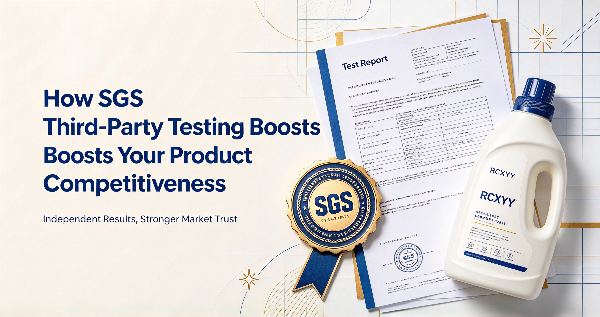
In crowded household care categories, product claims alone are rarely enough to win trust. Retailers, distributors and increasingly demanding consumers want evidence that a laundry detergent performs as stated, meets safety expectations and is fit for its intended market. This is where third-party testing — including reports from recognised bodies such as SGS — plays a practical role in strengthening a brand's market position.
This guide explains how third-party testing can support laundry detergent brands, which tests buyers may need to consider, and how relevant laboratory reports can help substantiate product claims and support market preparation. It is written for brand owners, private label operators and product managers who want to understand how independent testing fits into their sourcing and go-to-market strategy. For manufacturers that support product documentation and testing coordination, visit https://www.gdricheng.com/.
What Is Third-Party Testing and Why It Matters
Third-party testing means an independent laboratory — separate from both the manufacturer and the brand — evaluates a product against agreed test methods, safety standards or performance criteria. The resulting report provides an objective reference that retailers, customs authorities and consumers can review.
For laundry detergent brands, third-party testing serves several practical purposes:
• Retailer and importer confidence: Many retailers and distributors request test reports before listing a new product, particularly for chemical or household care categories.
• Regulatory and compliance support: Relevant test data may support product evaluation and certain compliance assessments. However, whether a report is accepted for regulatory submissions, import procedures or retailer approval depends on the destination market, applicable requirements and the scope of the report. Importers should confirm these requirements with the relevant authorities, regulatory advisers or retail partners.
• Consumer trust: When a product is described as SGS tested detergent or supported by other independent laboratory reports, it provides an external reference point that can reinforce product claims.
• Brand differentiation: In a category where many products make similar claims, independently verified data can help a brand stand out on shelf or online.
It is important to note that "third-party testing" is not a single certification. Different labs, test standards and product categories involve different evaluations. The following terms are often used interchangeably but have distinct meanings:
• Third-party testing: An independent laboratory evaluates a product against agreed test methods and issues a report.
• Test report: A written record of specific tests, methods, samples and results for the product tested.
• Laboratory accreditation: A formal recognition that a laboratory is competent to perform specific test methods under defined standards. The accredited scope should be checked for relevance.
• Product certification: A formal third-party attestation that a product meets a specific standard or scheme. Certification is separate from routine testing and requires its own evidence.
Buyers should clarify exactly which tests, standards and reports they need for their specific market and product claims, and confirm whether a formal certification is required in addition to test reports.
Common Testing Areas for Laundry Detergent
Third-party laboratories can evaluate laundry detergents across several dimensions. The tests selected depend on the product type, target market and the claims the brand intends to make.
Performance tests measure how well the product cleans under defined conditions. This may include stain removal tests, detergency evaluations, foam behaviour or rinsing performance. Test methods vary by standard, and buyers should confirm which test method is appropriate for their market and product positioning. Performance claims on packaging or marketing materials should be supported by the relevant test data.
2. Safety and Chemical Composition Testing
These tests evaluate the product's chemical composition, pH, active matter content, heavy metals, microbial limits or other safety parameters depending on the product and market. Such data can support product specifications and help confirm that the formulation aligns with destination-market expectations.
3. Stability and Shelf-Life Testing
Stability studies assess how the product performs over time under defined storage conditions — for example, changes in viscosity, fragrance, colour or separation. This can support recommended shelf-life claims and help identify packaging or formulation issues before large-scale distribution.
4. Packaging and Labelling Review
Some testing bodies also offer packaging evaluation, drop tests, leak testing or label compliance review. Packaging integrity is particularly relevant for liquid products shipped long distances and stored in varying climates.
5. Destination-Market Regulatory Testing
Depending on the target market, additional tests may be required to support regulatory registration, notification or import approval. Buyers should confirm the specific requirements with their regulatory adviser, as these vary by country and product classification.
How Test Reports Build Consumer and Retailer Trust
Third-party reports do not replace marketing — but they provide an evidence layer that makes marketing claims more credible.
For retailers and distributors
Retail buyers often request test reports as part of supplier onboarding. A product that arrives with relevant third-party documentation may be easier to evaluate and onboard than one supported only by the manufacturer's own internal data. This can shorten review cycles and reduce the buyer's perceived risk.
On e-commerce listings, packaging and brand websites, references to independent testing — such as an SGS tested detergent label or a mention of laboratory-verified performance — can help consumers feel more confident in their purchase, particularly for new or lesser-known brands. The exact wording and placement of such references should be reviewed so that they accurately reflect the tests actually performed.
Working through the testing process also helps the brand understand its own product better. Test data can inform formulation decisions, packaging choices and marketing positioning, and provides a baseline for comparison across production batches.
Explore our private label laundry and cleaning OEM capabilities to see how documentation support fits into a private label program.
What to Expect from a Third-Party Testing Process
A typical testing engagement follows a structured flow:
1. Define the required tests: The brand, manufacturer and laboratory agree on which test standards, methods and parameters apply. This may depend on the target market, product type and intended claims.
2. Sample submission: Representative product samples are sent to the laboratory, often with product specifications and intended use information.
3. Laboratory evaluation: The laboratory runs the agreed tests under controlled conditions.
4. Report issuance: The laboratory issues a written report detailing the test methods, conditions and results.
5. Review and action: The brand and manufacturer review the report. If results do not meet expectations, formulation or packaging adjustments may be needed before re-testing.
Timelines and costs vary depending on the number of tests, laboratory workload and product complexity. Buyers should plan testing early in the product development timeline, as results may influence formulation or packaging decisions.
Choosing the Right Testing Partner
SGS is one of several well-known global inspection, verification and testing organisations. Other recognised laboratories and certification bodies also offer relevant services. When selecting a testing partner, brand owners should consider:
• Accreditation: Is the laboratory accredited for the relevant test methods in the target market?
• Relevant experience: Does the laboratory have experience testing household cleaning products, detergents or similar chemical mixtures?
• Market recognition: Are the reports accepted by the retailers, customs authorities or markets the brand is targeting?
• Test scope clarity: Does the brand understand exactly what each report covers — and what it does not cover?
A common pitfall is treating a test report as a universal "approval" that applies to all markets. In practice, a report covers specific tests, under specific conditions, for specific samples. Buyers should confirm that the reports they receive match their intended marketing claims and destination-market requirements.
How RCXYY Supports Product Documentation and Testing Coordination
Guangdong Richeng Technology Industry Co., Ltd. (RCXYY) is a household cleaning product manufacturer based in Guangdong, China, supporting international buyers with product documentation and testing coordination for laundry care and household cleaning products.
Our documentation support includes:
• Product specifications: Written specifications for each SKU to support testing preparation and retailer onboarding.
• SDS documentation: Safety Data Sheet (SDS, commonly referred to as MSDS) documentation prepared based on the confirmed formulation and applicable requirements.
• Testing coordination where applicable: We can coordinate sample preparation and communication with recognised testing bodies such as SGS or other accredited laboratories, subject to the test scope and reports required by the buyer's market. Buyers should confirm which tests are needed for their specific destination market.
• Batch documentation: Production records and quality-control documentation are maintained to support consistency across repeat orders.
• Mixed-SKU container loading: Selected laundry care, dishwashing and surface cleaning SKUs can be combined in a single shipment, subject to product compatibility, packaging and loading requirements. Learn more about our mixed SKU container loading solutions.
For a firsthand look at our production facilities and quality-control procedures, consider scheduling a factory tour. To discuss testing requirements and documentation support for your product range, contact our export team.
Q1: What does "SGS tested detergent" actually mean?
It means the product has been evaluated by SGS or another accredited laboratory against specific test methods. It does not mean the product is universally "certified" for all markets. The exact scope depends on which tests were run, which standards were applied and which samples were submitted. Buyers should review the specific test report to understand what was evaluated.
Q2: Is third-party testing required before launching a detergent brand?
Requirements vary by country, product category and retail channel. Some markets or retailers may request specific tests as a condition of listing or import. In other cases, testing is undertaken voluntarily to support marketing claims and build consumer trust. Buyers should confirm the legal and commercial requirements for their target market with their regulatory adviser and retail partners.
Q3: How much does third-party detergent testing cost?
Costs vary widely depending on the number of tests, laboratory accreditation, product complexity and target market. A basic safety evaluation may cost less than a full performance, stability and regulatory package. Buyers should request quotes from accredited laboratories and confirm which tests are essential versus optional for their launch plan.
Q4: Can I use SGS test results on my packaging and marketing?
Test results can generally be referenced in marketing, but the wording should accurately reflect what was actually tested. Using a recognised laboratory's name or logo without proper authorisation may breach trademark or advertising rules. Buyers should discuss wording and logo usage directly with the testing body and make sure claims align with the actual report.
Q5: How long does detergent testing take?
Timelines vary by test type. Basic safety or composition tests may take a few weeks, while stability or shelf-life studies can take significantly longer. Buyers should plan testing into their product development schedule and confirm estimated turnaround times with the chosen laboratory.
Q6: Do I need different tests for different export markets?
Often, yes. Different markets have different regulatory frameworks, permitted ingredients, labelling rules and consumer expectations. A test that supports a claim in one market may not be sufficient for another. Buyers should identify the requirements for each destination market and coordinate testing accordingly.
Q7: Can the manufacturer arrange testing on my behalf?
Many manufacturers can coordinate sample preparation, documentation and communication with testing laboratories, as RCXYY does for its buyers. However, the brand owner typically remains responsible for defining which tests are needed, approving the report and ensuring marketing claims are accurate for each target market.
Third-party testing is not a marketing buzzword — it is a practical tool that helps brand owners substantiate product claims, satisfy retailer requirements and build consumer confidence. Whether referenced as an SGS tested detergent or supported by reports from another accredited laboratory, independent testing provides an evidence layer that can differentiate a product in a crowded category.
The key is clarity: knowing which tests are needed, what each report covers, and how to use that information accurately in packaging, marketing and retailer discussions. RCXYY supports brand owners with product specifications, SDS documentation and coordination with recognised testing bodies. Visit https://www.gdricheng.com/ to learn more, or contact our export team to discuss testing requirements for your product range.
Note: Third-party testing requirements, test methods, costs and timelines vary by laboratory, product category and destination market. This article provides general information and does not constitute legal, regulatory or testing advice. Buyers should confirm specific requirements with their chosen accredited laboratory, regulatory adviser and retail partners. SGS is a registered trademark of SGS S.A.; references to SGS in this article describe the laboratory's general services and do not imply endorsement or a specific certification held by RCXYY.