Release time:Oct 07,2026
Click amount:'1
By:Guangdong Richeng Technology Industry Co., Ltd
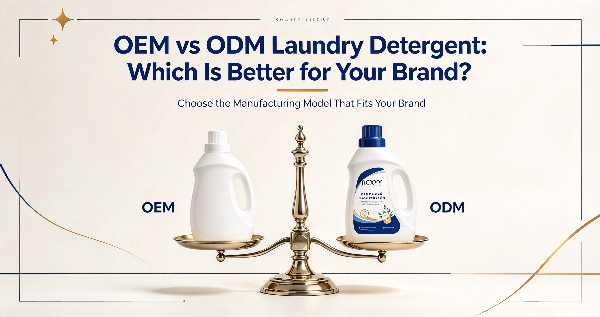
When launching a laundry care brand, one of the first sourcing decisions is whether to work with an OEM or ODM manufacturing partner. The two terms are often used interchangeably, but they describe different levels of product development control, investment and timeline. Choosing the right model can significantly affect launch speed, upfront cost, brand differentiation and long-term flexibility.
This guide explains the difference between OEM laundry detergent and ODM laundry detergent manufacturing, compares cost and control implications, and helps new brand owners decide which approach fits their stage, budget and product goals. It is written for first-time brand founders, startup DTC brands and private label operators evaluating manufacturing partnerships. For manufacturers that support both OEM and ODM laundry care development, visit https://www.gdricheng.com/.
What Is OEM Laundry Detergent Manufacturing?
OEM (Original Equipment Manufacturer) means the brand owner provides the product specification, formula direction and packaging design, and the manufacturer produces the product according to those requirements. In practice, this often means:
• The brand has a clear product concept — a specific fragrance profile, formulation type, pack size or performance target.
• The manufacturer adapts or develops a formulation to match the brand's brief, then produces it under the brand's label.
• The brand retains more control over product positioning, formula differentiation and packaging design.
• The project typically involves more sampling rounds, longer development time and higher upfront investment compared to selecting an existing product.
OEM laundry detergent manufacturing suits brands that want a differentiated product — for example, a specific fragrance that stands out on shelf, a formulation tailored to local washing habits, or a packaging format that matches the brand's visual identity.
What Is ODM Laundry Detergent Manufacturing?
ODM (Original Design Manufacturer) means the manufacturer provides an existing, pre-developed product formula and packaging range, and the brand simply adds its own label. In practice, this often means:
• The manufacturer already has developed laundry liquid, washing powder or fabric softener formulas that are ready for production.
• The brand selects from existing formulations, pack sizes and standard packaging options, then applies its own logo and label design.
• Product development time can be shorter because the manufacturer already has an existing formulation and production setup.
• Upfront investment is typically lower, but product differentiation is more limited — other brands may be selling similar formulas.
ODM laundry detergent manufacturing suits brands that want to launch quickly with lower initial investment, or test market demand before committing to a fully customised product. Explore our private label laundry and cleaning OEM capabilities.
Note: Terminology can vary between manufacturers, so buyers should confirm exactly what product development, formulation, packaging and intellectual-property services are included in the supplier's OEM or ODM offering.
Factor | OEM | ODM |
Formula development | Customised or adapted to brand brief | Existing manufacturer formula selected from a range |
Packaging design | Full customisation — bottle shape, label, artwork | Standard formats with own-label artwork applied |
Development timeline | Longer — sampling, revisions, approval | Shorter — existing formula, faster approval |
Upfront investment | Typically higher — formulation work, tooling, sampling | Typically lower — minimal development costs |
Product differentiation | Higher potential — unique formula and packaging | More limited — formula may be shared with other brands |
MOQ | Often higher due to custom development | May be lower for standard products |
Suitable for | Brands seeking long-term differentiation | Brands testing market or launching quickly |
These are general comparisons. Actual terms vary by manufacturer, product category, packaging complexity and destination-market requirements. Buyers should confirm details directly with their manufacturing partner.
The cost difference between OEM and ODM comes from where the development work happens — and who pays for it.
ODM: Typically lower upfront development cost, faster launch
Because the manufacturer has already invested in formula development and production setup, the brand does not bear those initial costs. ODM projects typically involve:
• Minimal or no formulation development fees
• Shorter sampling and approval cycle
• Standard packaging formats with lower tooling investment
• Potentially lower MOQ for initial orders
This makes ODM an accessible entry point for new brands with limited budget, or for testing a new category before scaling.
OEM: Higher upfront investment, stronger long-term differentiation
OEM projects involve more development work, which means higher upfront costs — but also more control. OEM projects may involve:
• Formulation development or adaptation based on brand requirements
• Custom fragrance, viscosity, pH or performance adjustments
• Custom packaging design, bottle shapes or label formats
• More sampling rounds and longer approval cycles
• Higher MOQ due to custom tooling and production setup
For brands planning long-term market presence, the investment in a differentiated product can support stronger brand identity and less direct price competition with other sellers of similar ODM products.
There is no universal "better" choice — the right model depends on your brand stage, budget and goals.
• You are launching your first product and want to test market demand
• Your initial budget is limited and you want lower upfront investment
• You need a faster time-to-market
• Product differentiation is less critical than getting shelf presence
• You have a clear product concept and want a differentiated offering
• You plan long-term brand building and want greater control over the product formulation and differentiation
• You are targeting a specific market with unique needs (e.g., low-temperature washing, regional fragrance preferences)
• You have sufficient budget for development, sampling and higher MOQ
Many brands start with ODM to validate the market, then move toward OEM for their core or best-selling products as the brand grows. This phased approach allows the brand to learn from customer feedback before investing in fully customised formulation and packaging. For example, a brand might launch with a standard ODM laundry liquid, then develop a custom fragrance variant or concentrated format once repeat purchase data is available.
Documentation & Compliance — Both Models
Regardless of whether you choose OEM or ODM, product documentation requirements remain similar. The manufacturer should be able to provide product specifications, Safety Data Sheet (SDS, commonly referred to as MSDS) documentation and applicable test reports for each SKU.
Buyers should confirm which documents are needed for their specific destination market — labelling, ingredient disclosure and certification requirements vary by country and product classification. The manufacturer can provide supporting documentation, but importers remain responsible for verifying local regulatory and customs requirements with their customs broker or regulatory adviser.
How RCXYY Supports Both OEM and ODM
Guangdong Richeng Technology Industry Co., Ltd. (RCXYY) is a full-category household cleaning product manufacturer based in Guangdong, China, with over 22 years of export experience. We support both ODM and OEM laundry detergent projects for new and established brands across multiple overseas markets.
Our capabilities include:
• ODM range: Existing laundry liquid, washing powder, fabric softener and dishwashing liquid formulations available for own-label branding, with standard pack formats and shorter lead times.
• OEM customisation: Formulation adjustment, fragrance selection, packaging customisation and label design support for brands seeking a differentiated product. Explore our OEM laundry detergent capabilities.
• Sample support: Product samples are available for buyer testing before mass production, for both ODM and OEM projects.
• Documentation: Product specifications, Safety Data Sheet (SDS) documentation and applicable test reports can be provided for each SKU. Buyers should confirm any additional local requirements before shipment.
• Mixed-SKU container loading: Selected laundry care, dishwashing and surface cleaning SKUs can be combined in a single shipment, subject to product compatibility, packaging and loading requirements. Learn more about our mixed SKU container loading solutions.
For a firsthand look at our production facilities, consider scheduling a factory tour. To discuss whether ODM or OEM fits your brand, contact our export team for a tailored consultation and quotation.
Q1: Is OEM laundry detergent more expensive than ODM?
OEM projects typically involve higher upfront investment due to formulation development, custom packaging and more sampling rounds. ODM projects use existing formulas and standard packaging, which reduces initial development costs. At larger order volumes, the unit-cost difference may become less significant than the initial development investment, but the upfront cost gap is usually the main factor in choosing a model.
Q2: Can I start with ODM and switch to OEM later?
Yes. Many brands start with ODM to test the market, then move to OEM for their core products as sales grow. This phased approach allows the brand to validate demand before investing in custom formulation and packaging.
Q3: How long does OEM vs ODM development take?
ODM projects typically have shorter timelines because the formula is already developed — approval and production may take a few weeks. OEM projects involve formulation sampling, revisions and packaging design, which can extend the timeline. Actual durations vary by project and should be confirmed with the manufacturer.
Q4: Will other brands sell the same ODM product as me?
Possibly. ODM products are based on existing manufacturer formulas, which may also be offered to other buyers. If product exclusivity is important, buyers should discuss exclusivity terms directly with the manufacturer. OEM products, by contrast, are developed or adapted for a specific brand and are less likely to be identical to another seller's product.
Q5: What MOQ should I expect for OEM vs ODM?
ODM products often have lower MOQs because they use existing production lines and standard packaging. OEM projects may have higher MOQs due to custom tooling, formulation setup and production scheduling. Buyers should request MOQ details for each product and model during supplier evaluation.
Q6: Does documentation differ between OEM and ODM?
Product documentation requirements are broadly similar — both models should provide product specifications, Safety Data Sheet (SDS) documentation and applicable test reports. Additional destination-market requirements vary by country and product classification, regardless of whether the product is ODM or OEM.
OEM and ODM are not inherently better or worse — they are different tools for different stages of brand building. ODM offers lower upfront cost and faster launch, making it suitable for new brands testing the market. OEM offers greater differentiation and product control, supporting long-term brand identity for established or ambitious brands. Many brands benefit from starting with ODM and transitioning to OEM for their core products as they grow.
If you are unsure which model fits your brand, RCXYY can help you evaluate both options based on your budget, timeline, target market and product goals. Visit https://www.gdricheng.com/ to learn more, or contact our export team to discuss your project and request samples.
Note: OEM and ODM definitions, timelines, costs and MOQ vary by manufacturer, product category and project complexity. This article provides a general comparison guide and does not constitute a commitment of specific terms. Buyers should confirm all details directly with their chosen manufacturing partner. Regulatory, labelling and certification requirements vary by destination market.