Release time:Oct 14,2026
Click amount:'137
By:Guangdong Richeng Technology Industry Co., Ltd
Introduction: Supermarket Laundry Detergent Sourcing Overview
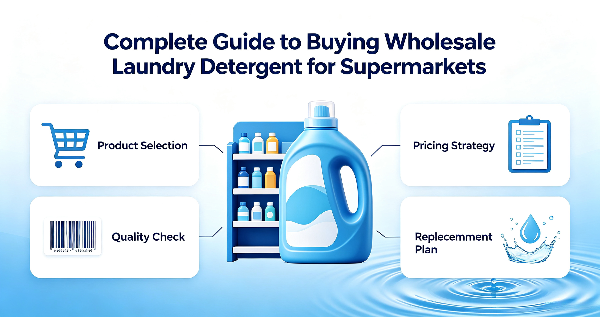
Laundry detergent is a core household-care category across many supermarket retail channels. For retail chains, selecting reliable wholesale laundry detergent for supermarket shelves directly shapes customer loyalty, shelf profitability and long-term supply-chain stability. Many supermarket procurement teams face recurring challenges: forecasting accurate stock volumes, matching product packaging to in-store layouts, negotiating sustainable pricing tiers and identifying manufacturers capable of delivering shelf-ready goods for fast-track distribution.
This guide has been written specifically for supermarket category buyers. It walks you through the full end‑to‑end purchasing workflow, breaks down packaging and formulation decisions, explains tiered pricing models, outlines shelf‑rollout strategies and highlights key supplier‑selection criteria when sourcing wholesale laundry detergent for supermarket retail ranges. Whether you manage a regional independent grocery store or lead procurement for an international multi‑site retail network, these actionable insights will streamline your household‑cleaning product sourcing decisions. Visit our official website to explore our full retail‑ready product portfolio: https://www.gdricheng.com/
1. Pre-Order Sourcing Preparation & Key Considerations
Before reaching out to detergent manufacturers, supermarket buyers should finalise baseline requirements for their laundry‑care category. Early‑stage planning reduces costly adjustments later in the procurement cycle and aligns orders with local consumer demand patterns.
Analyze Local Consumer Demand Traits
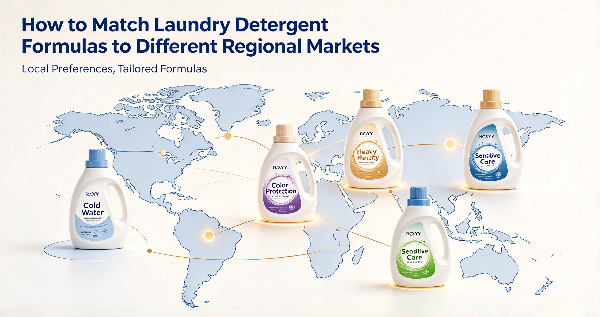
Every retail territory carries distinct shopper preferences. In some markets, shoppers may show stronger demand for premium liquid detergents, larger pack sizes, longer-lasting fragrances or phosphate-free formulations, while price-focused communities often favour cost-effective bulk washing powder packs. Supermarket buyers should review 6–12 months of historical sales data for existing laundry-care products, identify top-selling fragrance profiles (including lavender, jasmine, sea-fresh scents) and map gaps within the current shelf range.
Build Tiered Supermarket Product Mix Strategy
A well‑balanced supermarket laundry shelf usually combines three product tiers:
• Value‑range SKUs: Budget‑friendly washing‑powder packs for price‑sensitive shoppers
• Mid‑range household staples: 1L‑5L liquid‑detergent jugs for regular family‑size laundry loads
• Premium‑positioned lines: premium liquid detergents, fabric‑softener bundles and specialised formulations for targeted consumer segments
Mixing multiple product formats allows retailers to capture revenue from different customer segments and prevents over‑reliance on one single‑product category.
Clarify Budget and Profit Margin Targets
Define your target retail profit margin before requesting supplier quotations. Always separate landed costs, including manufacturing fees, sea‑freight charges, import‑clearance expenses, local warehousing and distribution overheads, from base‑product pricing. Many new supermarket procurement teams underestimate full landed costs, which can erode expected retail margins after goods arrive at their destination warehouse.
2. Standard Bulk Procurement Workflow for Supermarkets
Sourcing wholesale laundry detergent for supermarket distribution follows a structured workflow, especially when importing finished goods directly from overseas manufacturers. Adhering to this ordered process helps buyers reduce supply‑chain risk and maintain consistent product quality across repeated shipments.
Step 1: Shortlist qualified detergent manufacturers
Prioritise suppliers with established export experience, relevant quality‑management certifications and a track record of fulfilling large, container‑scale retail orders. Request factory audit reports, product‑safety documentation and recent references from other supermarket‑sector clients. Direct‑from‑factory sourcing removes intermediate wholesaler mark‑ups, creating extra margin flexibility for your retail business.
Step 2: Submit detailed product specifications and request formal quotations
Send suppliers a clear specification sheet listing product‑type, net‑fill weight, fragrance selection, formulation requirements, packaging artwork guidelines, order volume and preferred delivery timeline. Detailed specifications help manufacturers provide precise, all‑inclusive pricing quotations and cut down rounds of revision.
Step 3: Order and evaluate pre‑production samples
Always test physical samples before confirming mass‑production. Carry out stain‑removal performance testing, check fragrance longevity, inspect packaging print quality and verify label readability. Sampling reduces the risk of receiving large shipments that fail to meet your supermarket’s retail‑quality standards.
Step 4: Confirm order terms, production schedule and shipping arrangements
Once samples are approved, finalise your purchase contract covering minimum‑order quantities, payment conditions, production lead‑time, loading plans and required export documentation such as commercial invoices, packing lists and certificate‑of‑origin paperwork. Reputable detergent suppliers can assist buyers by preparing most of the documentation required for destination‑port customs clearance.
Step 5: Arrange production inspection and container loading supervision
For large‑volume supermarket shipments, buyers may opt for third‑party pre‑shipment inspection to verify batch‑to‑batch consistency. After inspection, goods are packed into sealed shipping containers for ocean freight transport to your local distribution hub.
Step 6: Receive stock, complete import clearance and launch in‑store distribution
Once the container arrives, complete local import formalities, transfer inventory to your warehouse and begin dispatching stock out to individual supermarket locations according to your shelf‑rollout timeline.
3. Supermarket-Adaptable Packaging & Compliance Solutions
Packaging is a critical buying decision, as it shapes both shopper‑first impressions and operational efficiency for your supermarket stock‑handling teams. When sourcing wholesale laundry detergent for supermarket shelves, select pack sizes and formats suited to your aisle layout, shelf height and target‑customer groups.
Common Retail Packaging Specifications & Scenarios
1. Plastic jug bottles (1L, 2L, 3L, 4L, 5L)
Liquid-detergent plastic jugs are a common format for mid- to premium-positioned supermarket laundry ranges. Ergonomic side handles improve customer handling, while transparent or semi-transparent bottle walls allow shoppers to view remaining product volume. These bottles stack neatly on standard supermarket shelving and suit large-family-household buyers.
2. Sealed powder bags (500g, 1kg, 2kg, 3kg, 5kg, 10kg)
Washing‑powder pouches deliver strong value‑oriented sales performance. Lightweight packaging keeps freight costs lower per kilogram of product, and large‑size 5kg and 10kg packs appeal to cost‑conscious shoppers. Printed carry handles on bigger‑size bags greatly improve in‑store customer convenience.
3. Small sachet packs
Single‑use or small‑size sachets work well as promotional entry‑level products, ideal for seasonal supermarket promotions, bundle deals and trial‑offer campaigns.
Regional Labelling & Regulatory Compliance Guidelines
Retail-ready detergent packaging should meet the applicable labelling requirements in the target market. Required content typically includes ingredient lists, usage guidance, net-content weight, batch numbers, shelf-life expiry dates, safety warnings and manufacturer-origin information. Requirements for ingredients, safety information, language, packaging and documentation vary by destination market, so buyers should confirm applicable local regulations before production. When ordering private-label products, share your supermarket’s branding guidelines early so your supplier can produce artwork-approved packaging before production begins.
Logistics-Optimized Outer Carton Design Standards
Beyond retail‑facing consumer packaging, pay attention to outer master carton dimensions. Well‑sized cartons improve container‑loading efficiency, reduce wasted shipping space and simplify pallet‑stacking inside your supermarket warehouse. Your detergent supplier can recommend carton configurations optimised for full‑container shipments.
4. Pricing Rules & Retail Margin Optimization Tactics
Successful laundry‑care retailing depends on building a sustainable pricing model that balances competitive shelf prices and healthy profit returns for your supermarket chain.
Volume-Based Tiered Pricing Mechanism
Many detergent manufacturers use tiered pricing, with unit costs often varying according to order volume, packaging requirements and product specifications. Supermarket chains with multiple store locations can consolidate procurement requirements into bigger bulk orders to unlock more favourable unit prices. Smaller independent supermarkets may group orders with other local retail partners to reach higher‑volume pricing brackets.
Benefits of Long-Term Cooperative Supply Agreements
Long-term supply agreements may provide greater planning visibility when raw-material, fragrance and packaging costs fluctuate. This stability makes budget forecasting far simpler for retail procurement teams.
Balanced Pricing for Daily Sales & Promotions
Plan two price levels for your wholesale laundry detergent range: an everyday regular shelf price and discounted promotional pricing for seasonal sales events. When negotiating with suppliers, discuss options for temporary promotional stock‑support to protect your profit margin during supermarket discount campaigns.
5. In-Store Shelf Deployment & Scientific Inventory Management
Once your wholesale laundry detergent shipment arrives, a carefully planned shelf‑placement strategy maximises sales performance.
Standardized Supermarket Shelf Layout Strategies
Reserve dedicated aisle space for your full laundry‑care portfolio. Group matching‑fragrance laundry detergent and fabric‑softener products side‑by‑side to encourage cross‑selling. Place high‑turnover family‑size packs at easy‑to‑reach shelf heights, while smaller promotional sachets can be displayed on end‑cap stands close to checkout zones.
Inventory Rotation & Stock Prevention Rules
Laundry‑care products have defined shelf‑life periods. Implement a first‑in‑first‑out stock rotation rule within your warehouse and supermarket outlets to avoid expired inventory. Work out monthly sales velocity for each SKU so you can schedule repeat orders at the right time and prevent empty shelf gaps.
Private-Label VS Branded Sourcing Mode Analysis
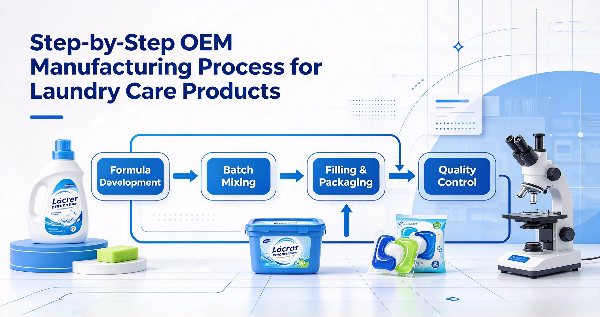
Supermarket buyers have two core sourcing routes: purchasing finished branded detergent products or launching their own supermarket private‑label laundry‑care range. Private-label manufacturing gives retailers greater control over product positioning, packaging design and brand presentation. Reliable OEM detergent factories deliver complete one‑stop services, from formulation development to shelf‑ready finished goods.
6. Professional Supplier Evaluation Checklist for Supermarket Buyers
Your supplier partnership forms the foundation of a successful long‑term wholesale laundry detergent supply chain. Below are key evaluation criteria for supermarket procurement managers:
• Production Capacity Verification: Prioritize manufacturers with scalable automated production lines. Verify actual production lead-time and recent container loading records to confirm stable bulk shipment capabilities for recurring supermarket orders.
• Professional Quality Control System: Confirm suppliers implement standardized batch inspection and retention mechanisms. Request batch QC records and consistency management reports to support long-term shelf product stability.
• Complete Export Documentation Support: Ensure the supplier can provide full sets of trade documents, including certificates of origin and market-adaptive SDS files to match different regional import rules.
• Mature Private Label & OEM Workflow: Validate the supplier’s sample evaluation, formula adjustment and artwork approval process to avoid delays in supermarket private-label project launches.
• Optimized Logistics & Container Loading: Confirm customized outer carton dimensions and mixed-SKU loading plans to maximize container utilization and reduce supermarket procurement logistics costs.
• Responsive After-Sales Communication: Select suppliers that provide regular production progress updates and efficient problem resolution for post-shipment follow-up.
7. Core Advantages of Sourcing Wholesale Detergent From RCXYY
As a professional household cleaning product manufacturer with 22+ years of export experience, RCXYY specializes in supporting supermarket and retail chain bulk procurement and private-label projects. Different from ordinary trading companies and small workshops, our factory-direct model, full-category product layout and mature export system perfectly match the long-term sourcing needs of global supermarket buyers, helping retailers build stable laundry and household cleaning product ranges aligned with their local market needs.
Full-Category Retail-Ready Product Portfolio
We provide one-stop supermarket sourcing solutions covering core cleaning categories, avoiding the trouble of multi-supplier coordination. Our mainstream retail products fully adapt to supermarket shelf sales scenarios, including laundry liquid, washing powder, fabric softener, dishwashing liquid and multi-purpose household cleaners. Multiple specifications from family large packs to promotional small sachets meet differentiated retail sales needs.
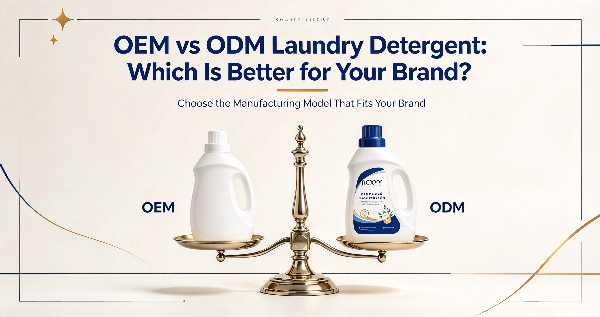
Professional Supermarket Customization & OEM/ODM Service
We support tailored formula adjustment, fragrance selection, packaging printing and brand private label customization for supermarket retail. Our in-house R&D and QC team can complete sample testing, batch proofing and standardized mass production, delivering shelf-ready products for global retail chains. Learn more about our customized solutions via our private label OEM page.
Flexible Mixed-SKU Container Loading Advantage
For supermarket buyers with diverse product needs, we support flexible mixed SKU container loading, allowing multiple cleaning product SKUs to be combined in one container. This mode effectively reduces single-product inventory pressure, enriches supermarket shelf categories and optimizes overall logistics costs.
Standardized Export & Compliance Support
We can provide product specifications, SDS, applicable test reports and other supporting export documents. Buyers can work with our team to identify the documentation required for their target market and confirm any additional local requirements before shipment.
Transparent Sample Evaluation Mechanism
Pre-production sample evaluation can be arranged for supermarket bulk orders before mass production. Batch management and sample retention procedures help support product consistency across repeat orders. Buyers can evaluate cleaning performance, fragrance characteristics and packaging quality before mass production to ensure products meet local retail sales standards.
Explore our full retail wholesale solutions and factory strength via our official website:https://www.gdricheng.com/
FAQ: Common Questions for Supermarket Detergent Bulk Sourcing
Q1: What is the typical minimum‑order quantity for wholesale laundry detergent for supermarket shipments?
MOQ depends on the product, packaging specification and customisation requirements. Many professional manufacturers accept full-container-load supermarket orders, while qualified suppliers offer flexible mixed-SKU container loads allowing buyers to combine multiple detergent formats in a single shipment.
Q2: How long does full‑container production and shipping take for supermarket bulk orders?
Production lead-times depend on order complexity, especially for custom private-label artwork and formula adjustment. Ocean-transit duration varies widely based on destination port. Always confirm estimated timelines with your supplier when planning supermarket launch dates.
Q3: Can I mix different detergent SKUs inside one shipping container for my supermarket?
Yes. Professional detergent manufacturers support mixed-product container loading, enabling supermarket buyers to order a diverse selection of washing powder, liquid detergent and fabric softener items in one single shipment to enrich shelf categories and control inventory costs.
Q4: Are custom‑printed private‑label packs suitable for small‑to‑mid‑sized supermarket chains?
Private-label projects can be suitable for small-to-mid-sized supermarket chains, depending on MOQ, packaging requirements, product specifications and target-market regulations. Experienced OEM detergent producers guide retail clients through every stage of label design, formulation sampling and mass production to create exclusive retail product lines.
Q5: What documents will I receive for my imported wholesale detergent shipment?
Standard export documentation includes commercial invoice, packing list, bill of lading and certificate of origin. Additional safety-related product reports such as SDS (Safety Data Sheet) and third-party test reports can be supplied upon buyer request.
Q6: What packaging sizes are most suitable for supermarket laundry detergent retail?
Supermarket-friendly sizes cover diversified consumer demands: 1L–5L liquid detergent jugs for family daily use, 500g–10kg washing powder bags for cost-sensitive shoppers, and small sachets for promotional and trial sales. Matching multiple specifications can effectively increase shelf turnover.
Q7: Can supermarkets launch exclusive private-label laundry detergent products?
Yes. Professional OEM/ODM manufacturers can support private-label customisation, including formulation, fragrance, packaging and brand logo printing, subject to product requirements and order conditions. It helps supermarkets differentiate from competitors and improve retail profit margins.
Q8: What key points should buyers check before approving detergent samples for bulk orders?
Before confirming mass production, supermarket buyers should verify three core points: product cleaning performance and fragrance stability, packaging print quality and label compliance with local regulations, and batch consistency standards. Complete sample retention and testing records can avoid large-order quality risks.
Conclusion: Optimize Supermarket Sourcing for Stable Retail Growth
Buying wholesale laundry detergent for supermarket shelves is far more than placing a simple bulk-goods order. Successful procurement requires careful demand forecasting, well-thought-out packaging decisions, margin-focused pricing negotiations, robust supplier partnerships and strategic in-store shelf-planning. When supermarket buyers combine thorough pre-order preparation with direct-factory sourcing, they build resilient household-product supply chains, boost retail profitability and deliver high-quality laundry-care goods that satisfy repeat-customer demand.
Whether you are refreshing your existing laundry-product shelf range or launching an all-new private-label collection for your retail outlets, RCXYY’s factory-direct wholesale solutions are tailored for supermarket distribution. Request product specifications, packaging options and a targeted wholesale quotation from RCXYY to start your stable long-term retail sourcing partnership. Visit https://www.gdricheng.com/ to browse our full retail-ready product catalogue.